Incheon Airport
Transport Guide
Everything you need to get from ICN to Seoul, Busan, Daejeon, Daegu, Jeonju & beyond — fares, schedules & real tips for foreigners.
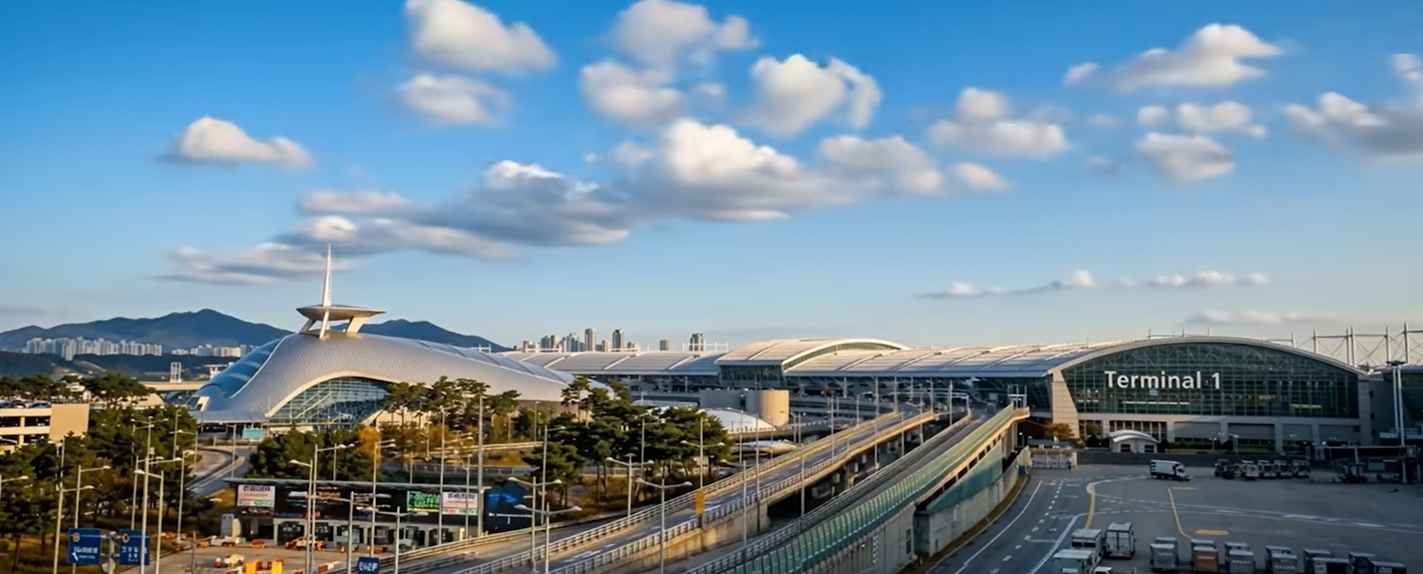
🗺️ Real Experience: Sejong & Daejeon to ICN
Incheon Airport is a place of excitement for most travelers. For frequent business flyers like my husband — who makes 4 to 5 international trips a year — it is something else entirely: a giant gateway where every minute counts and the margin for error is zero. We lived in Daejeon for many years before relocating to Sejong City, and the route between our home and the airport has been part of our lives for a very long time. What follows is not advice pulled from a website. It is what we have actually done, year after year, including the mistakes.

🚌 Our Default Method: The Direct Limousine Bus
Whether departing from Daejeon in the past or from Sejong City now, my husband's default method has always been the direct limousine bus to Incheon Airport. The reasons are straightforward: the fare is reasonable, the seats are wide and reclining, and — crucially — luggage goes into the undercarriage compartment, which means no wrestling with suitcases on stairs or escalators. Door to departure gate, in one smooth motion.
My husband almost always books morning flights to Europe or the US. That means arriving at Incheon by around 7:00 AM — which means boarding the limousine bus from Sejong at approximately 4:00 AM. The night before departure, he simply doesn't sleep. He stays awake, finishes his packing and preparations, and boards the bus — where he sleeps the entire 2.5-hour journey to the airport. He wakes up at the terminal, refreshed enough to check in. His colleagues at work use the same approach. As he puts it: "It's not just a travel hack — it's how you start beating the jet lag before you even board the plane."
The early-morning buses (04:00, 04:30) are the ones business travelers fight over. On a normal weekday, I try to book at least 2 days in advance. On Mondays — when the week's first wave of business travelers all depart simultaneously — I book 4 to 5 days ahead. I've seen the 04:00 bus go from available to sold out in a single afternoon.
⏱️ Holidays & Long Weekends: The Bus Becomes a Gamble
On ordinary days, the limousine bus is a comfortable companion. The moment a major Korean holiday approaches, the entire calculation changes — and I mean completely.
When a business trip falls during Chuseok, Seollal (Lunar New Year), or any extended national holiday period, I don't even consider the bus. I close the app without a second's hesitation. The highways during those periods don't slow down — they stop. A journey that normally takes 2 hours and 40 minutes can turn into 5 hours or more, with no way to predict the outcome. Missing a flight is not an inconvenience you can fix. It is a catastrophe.
This is when our "KTX + Gwangmyeong cheat code" comes into play. My husband takes the KTX from Osong Station (the closest KTX stop to Sejong) or Daejeon Station, rides to Gwangmyeong Station, and switches to Bus 6770 — a Korail-operated shuttle that runs directly to the airport on a dedicated route, completely immune to highway congestion. The train is on tracks. The shuttle uses its own lane. No traffic. No anxiety. No watching the clock.
There is one more advantage at Gwangmyeong that most travelers don't know about: the city airport terminal (도심공항터미널) inside the station. My husband checks in and drops his luggage at Gwangmyeong, before boarding Bus 6770. He arrives at Incheon without bags, walks straight past the check-in queues, and heads directly to security. The time saved — and the stress avoided — is remarkable. When everyone else on the highway is watching their flight time tick away, he's already in the lounge.
🛬 The Return Trip: Real-Time Ticket Management
The outbound journey is something we can plan carefully. The return is a different kind of challenge — one that plays out in real time, every single trip.
My husband's flights usually land between 4:00 PM and 6:00 PM. Before he even reaches the gate, I've already pre-booked a return bus ticket — based on his scheduled landing time plus a reasonable buffer. But international arrivals are not predictable. Flights land 20 minutes early or 20 minutes late. Luggage sometimes takes an extra 40 minutes. Sometimes more.
So we have a system. The moment his plane touches down at Incheon, he sends me a quick message estimating when he'll clear immigration and collect his bags. I'm at home, with the Bustago app open. If the bus I booked is too early, I change the ticket to a later departure. If there's still a slot available on a sooner bus, I switch him to that one instead. Either way, I absorb the change fee — sometimes two change fees on a single trip. I don't mind. He's exhausted after a long flight. Getting him home one bus earlier is worth whatever the penalty costs.
This is only possible because Bustago now supports real-time online booking and changes. A few years ago, this kind of flexibility didn't exist. Now it does — and it has genuinely changed how manageable international travel from regional cities feels.
🏙️ Getting to Seoul: A Lesson in Rush-Hour Reality
My husband's company occasionally hosts events in Seoul, Busan, and Jeonju that involve foreign guests — and he's the one responsible for making sure those guests reach their hotels without confusion or undue stress. Here is one experience that changed how he thinks about airport-to-Seoul transport.
About six months ago, a foreign business partner visited Korea for meetings at COEX Mall in Gangnam. He was staying at the Ramada Seoul Hotel nearby. My husband had two options: AREX to Seoul Station, then subway to Cheongdam station — three transfers with heavy luggage, which felt unreasonable for a tired guest arriving from overseas. Or the Airport Limousine Bus 6103, which goes directly to the Gangnam area. The navigation app showed an estimated travel time of about 1 hour 15 minutes. That seemed perfectly acceptable for a weekday evening.
It was not. They boarded during the tail end of rush hour. The Olympic Expressway came to a complete standstill. What should have taken 75 minutes took 1 hour 50 minutes. The seats were comfortable — wide, reclining, exactly what you'd want for a tired international traveler — and the guest did manage to sleep through most of the delay. But my husband's conclusion was clear: "If there's any kind of time pressure — a dinner reservation, an evening meeting, a connecting journey — you simply cannot trust a bus into central Seoul during rush hour."
The lesson: For Gangnam arrivals on weekday evenings (roughly 17:00–20:00), add at least 45–60 minutes to any estimated bus travel time. If punctuality matters, take the AREX to Seoul Station and switch to the subway — the underground is immune to surface traffic.
🚄 AREX Express: The Right Choice for a Foreign Guest's First Impression
I spend most of my time commuting between home and the airport via the regional bus — always heading south toward Daejeon or Sejong, never into the city. But there is one occasion I remember distinctly. A close foreign buyer and friend was visiting Korea, and I went to Incheon to meet her at the arrivals gate.
Instead of the southbound bus, we boarded the AREX Express toward Seoul Station. As the train crossed Yeongjong Bridge, the evening sun was spreading red and orange across the water below. My friend — a seasoned international traveler — went quiet and just watched. Then she said something I hadn't expected. She said she hadn't realized Korea looked like this.
I had taken that route dozens of times in my mind, planning other people's journeys. But that evening, seeing it through her eyes — the sea, the light, the clean quiet of the express cabin — I understood something I hadn't before. For a foreign visitor, the journey from the airport is the beginning of Korea. Make it a good one.
The AREX Express is not the cheapest option. But for a foreign guest's first arrival in Korea, it is the one I recommend without reservation.
🚌 The Sejong Direct Bus (Sejong City Hall Terminal → ICN)
There's a dedicated intercity bus running from Sejong City Hall Terminal directly to Incheon Airport T1 & T2. The last bus departs at 16:30, and with 15 departures daily filling up fast, advance booking is non-negotiable.
| Departure (Sejong) | Class | Adult Fare |
|---|---|---|
| 03:40 🌙 | Night Premium (심야우등) | ₩30,600 |
| 04:00 | Standard (우등) | ₩25,500 |
| 04:30 | Standard (우등) | ₩25,500 |
| 04:55 | Standard (우등) | ₩25,500 |
| 06:00 | Standard (우등) | ₩25,500 |
| 07:05 | Standard (우등) | ₩25,500 |
| 08:15 | Standard (우등) | ₩25,500 |
| 09:10 | Standard (우등) | ₩25,500 |
| 10:10 | Standard (우등) | ₩25,500 |
| 11:30 | Standard (우등) | ₩25,500 |
| 12:30 | Standard (우등) | ₩25,500 |
| 13:30 | Standard (우등) | ₩25,500 |
| 14:30 | Standard (우등) | ₩25,500 |
| 15:30 | Standard (우등) | ₩25,500 |
| 16:30 ⚠️ Last | Standard (우등) | ₩25,500 |
Travel time to T2: approx. 2h 25–40m depending on traffic. Source: Bustago / asamaru.net, verified May 2026.
The bus picks up passengers at Sejong Express Terminal and Sejong Government Complex before heading to the airport. By the time it departs Sejong City Hall, many seats are already taken. Mondays around dawn and Friday evenings are the worst — business travelers pack every seat. Book at least 1–2 days ahead on Bustago. For Monday morning departures, I book 4–5 days in advance.
🚌 The Yuseong Route (Daejeon Yuseong Terminal → ICN)
Travelers from Daejeon often use the Yuseong Intercity Bus Terminal. This bus routes through Sejong on its way to the airport — meaning seats are partially filled before it reaches Daejeon. Only 5 departures daily. Advance booking is essential.
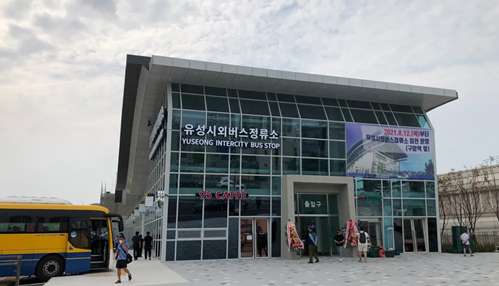
| Departure (Yuseong) | Class | Fare →T1 | Time |
|---|---|---|---|
| 03:40 🌙 | Night Premium | ₩22,700 | ~2h 43m |
| 04:35 | Premium (우등) | ₩22,700 | ~2h 43m |
| 07:50 | Premium (우등) | ₩22,700 | ~2h 43m |
| 09:45 | Premium (우등) | ₩22,700 | ~2h 43m |
| 15:05 ⚠️ Last | Premium (우등) | ₩22,700 | ~2h 43m |
Fare shown is for T1. Only 5 departures per day — plan carefully. This bus stops at Sejong before Yuseong, so available seats at Yuseong are fewer than the schedule implies.
During major Korean holidays (Chuseok, Seollal / Lunar New Year) and extended national holiday periods, my husband always switched from the bus to KTX via Osong Station. Highway traffic during those periods is completely unpredictable — a 2h 40m bus ride can easily become 5+ hours, with no way to know when you'll arrive. The KTX guarantees arrival time, which is the only thing that matters when a flight is at stake.
🚄 The Late-Night Backup: Bus 6770 + Gwangmyeong KTX → Osong
Missed the last direct bus? Take Bus 6770 from the airport to Gwangmyeong Station (₩16,000, ~75 min per Korail official data), then board a KTX toward Osong — the KTX stop closest to both Daejeon and Sejong. A taxi from Osong to central Sejong costs around ₩15,000. Total cost approximately ₩38,600.
Always check real-time seat availability on Bustago the moment you know your flight details. For popular Friday evening slots, seats can sell out 3–4 days in advance. Don't wait until the night before.
🛬 First 3 Things to Do After Landing
You've landed. Immigration done. Bags collected. Now what? Before you rush for a bus or train, knock out these three things — they'll make the rest of your trip dramatically smoother.

- Grab a T-money Card (₩4,000–5,000)
Head to any GS25, CU, or 7-Eleven inside the arrivals hall. A T-money card covers subway, bus, AREX all-stop train, and even some taxis. Load cash at any convenience store machine — credit cards are for purchase only, not recharging. - Pick Up Your Pocket Wi-Fi or SIM Card
KT, SKT, and LG U+ all have counters on the 1st floor of both T1 and T2. A working data connection is essential for Naver Maps, booking last-minute buses, and calling taxis via app. - Buy Your Transport Ticket Before Exiting
At Terminal 2, limousine bus tickets must be purchased inside the arrivals hall at the ticket counter — you cannot buy them at the bus stop outside. AREX tickets are sold at the station below (B1/B2). Don't walk out empty-handed.
Terminal 2: Korean Air, Delta Air Lines, Air France, KLM (SkyTeam partners). Terminal 1: Asiana Airlines, Jeju Air, Jin Air, Air Seoul, T'way, and most other international carriers. Free shuttle every 5–7 min, ~15–18 min journey. Always confirm on your e-ticket.
🏙️ Incheon → Seoul: 4 Options Compared
This is the route most travelers need to sort out first. Each option has a clear sweet spot — pick the one that matches your budget, luggage situation, and time of arrival.

Non-stop between Seoul Station and Incheon T1/T2. Reserved seats, free Wi-Fi, and dedicated luggage racks in car 4. The premium option — worth it if you value reliability and comfort. This is the option I chose when accompanying my foreign guest, and I would choose it again every time.
Best for: business travelers, solo with big suitcase, hotels near Seoul Station or Myeongdong. And for any foreign visitor's first arrival in Korea — the Yeongjong Bridge view alone is worth it.
Makes ~13 stops including Hongdae (Hongik Univ.), Gongdeok, and Digital Media City. No seat reservation — standing possible during peak hours.
Best for: light luggage, budget travelers, Hongdae or Sinchon area.
Drops you near your hotel in many Seoul neighborhoods. Comfortable reclining seats, driver stows luggage. Traffic is the wildcard — allow extra time during rush hour. Based on our experience with Bus 6103 to Gangnam, always add 45–60 minutes to the estimated journey time if you're traveling on a weekday evening.
Best for: families, heavy luggage, Gangnam / Hongdae / Jongno hotels — but only if you're not in a hurry during rush hours.
Four dedicated night routes keep running after regular services stop. Perfect for very early flights or late arrivals.
| Route | Destination | Fare |
|---|---|---|
| N6000 | Gangnam Express Bus Terminal | ₩17,000 |
| N6002 | Hongdae → Cheongnyangni | ₩17,000 |
| N6701 | Seoul Station → DDP | ₩18,000 |
| N6703 | COEX → Gwangnaru | ₩18,000 |
Departs T1 from 23:40 onwards; every 30–40 min. Source: Incheon Airport official site.
Convenient but expensive. The International Taxi (☎ 1644-2255, T1 Gate 4C / T2 Gate 3C) offers English-speaking drivers and fixed zone rates. Groups of 3–4 make the cost more reasonable.
Best for: midnight arrivals, groups, heavy luggage to far districts. Use K-Ride or Kakao T app.
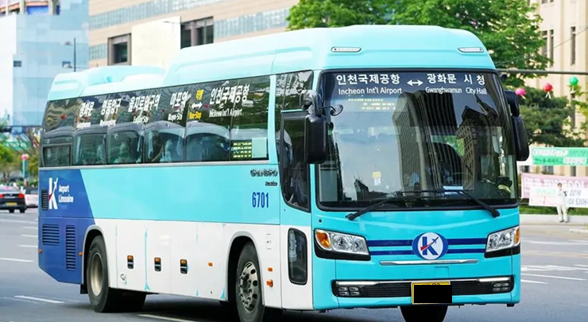
🌊 Incheon → Busan: Best Routes
Getting to Korea's second city from Incheon takes planning. You have three main options, each with a very different trade-off between time and cost.

🚌 Option A — Direct Intercity Bus (Haeundae / Busan route)
The most relaxed option. About 16 departures daily (T1 Gate 11 / T2 B1 Stop 4). Terminates at Haeundae or Busan Nopo bus terminal depending on operator.
₩64,200 (심야우등)
₩59,300 (심야우등)
🚄 Option B — AREX Express + KTX from Seoul Station
Fastest overall with one transfer. AREX Express to Seoul Station (43 min), then KTX to Busan (~2h 15m). Clean and predictable — book KTX in advance online.
(AREX ₩13,000 + KTX from ₩50,800)
🏆 Option C — Bus 6770 → Gwangmyeong KTX Best Value
The "secret weapon" route. Take Bus 6770 to Gwangmyeong Station (₩16,000, ~75 min), then KTX to Busan (~2h 5–10m from Gwangmyeong). Shorter distance = lower fares, and seats are far easier to get than at Seoul Station. This is also the route we rely on during holiday periods — Gwangmyeong is immune to highway congestion.
(Bus ₩16,000 + KTX ~₩50,000)
T2: B1 Transport Center
🏛️ Incheon → Daejeon & Sejong
Korea's administrative capital region is well-connected to Incheon — as long as you catch the right bus. Here's the full picture, including the backup route for late arrivals.
🚌 Sejong Direct Bus (Best Option, If You Catch It)
15 daily departures, first at 03:40, last at 16:30. Travel time approximately 2h 25–40m to T2. Fare ₩25,500 (standard) or ₩30,600 (night premium for 03:40). Book ahead — seats fill fast, especially on Monday mornings and Friday evenings.
🚌 Daejeon Complex Terminal Bus
Departs as early as 02:50 from Daejeon Complex Terminal, takes approximately 3h 26m. Adult fare ₩33,200 (우등). Good if you're near the main Daejeon terminal area.
🚌 Yuseong Intercity Bus (Daejeon)
5 daily departures from Yuseong Terminal (03:40–15:05). Fare ₩22,700 (→T1). Travel time ~2h 43m. This bus routes through Sejong, so seats are partially filled before reaching Yuseong — book early.
🚄 Late Option: Bus 6770 + Gwangmyeong KTX → Osong
If you miss all direct buses (or land after ~14:00), take Bus 6770 to Gwangmyeong Station, then KTX to Osong. From Osong, a taxi to central Sejong costs ~₩15,000. Total: ~₩38,600, around 2h 10–30m. KTX runs until late evening.
| Route | Duration | Cost | Last Dep. |
|---|---|---|---|
| Sejong Direct Bus | ~2h 25–40m | ₩25,500 | 16:30 |
| Daejeon Terminal Bus | ~3h 26m | ₩33,200 | Check Bustago |
| Yuseong Bus (→T1) | ~2h 43m | ₩22,700 | 15:05 |
| Bus 6770+KTX→Osong | ~2h 10–30m | ~₩38,600 | Runs late |
The last Sejong direct bus leaves at 16:30. If your flight lands after approximately 14:00, the Bus 6770 + KTX combo becomes your only practical option. Plan in advance.
🗾 Incheon → Daegu, Jeonju & Other Cities
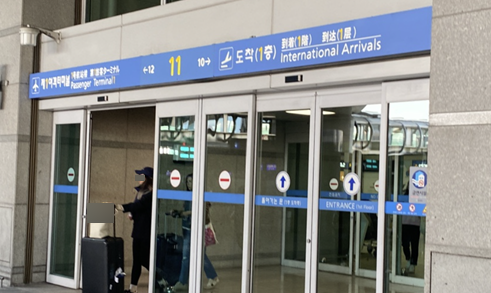
🚌 Daegu
Direct intercity buses run approximately 29 times a day between Incheon Airport and Dongdaegu Complex Transfer Center, from around 06:20 to 23:20. Travel time consistently ~4h 5m (T1 basis).
| Option | Duration | Cost (Adult) |
|---|---|---|
| Direct Bus (우등 Premium) | ~4h 5m | ₩41,500 |
| Direct Bus (프리미엄 First-class) | ~4h 5m | ₩53,900 (심야 ₩45,700) |
| Bus 6770 + Gwangmyeong KTX | ~2h 40–50m | ~₩58,500+ |
If time matters more than money, the KTX route via Gwangmyeong is dramatically faster. If you're happy to relax on a bus, the direct option saves cash.
🚌 Jeonju
A direct limousine bus runs from Incheon Airport to Jeonju in about 3h 5m. Adult fare ₩30,700. There is no convenient KTX station serving central Jeonju directly, so the direct bus is your clear best option.
Many more cities (Suwon, Cheonan, Changwon, Gwangju, Ulsan and more) have direct bus services from Incheon. Check bustago.or.kr for full listings.
🚄 KTX Booking & Korail Pass

📱 Booking as a Foreigner
Booking KTX used to be a headache for foreigners — not anymore. The official English website (korail.com/global/eng) supports guest checkout without a Korean phone number. Klook also offers real-time KTX booking with an English-friendly interface.
💰 Fares & Discounts
- Standard seats: roughly ₩10,000 (short hops) to ₩59,800 (Seoul–Busan, economy non-reserved)
- Economy reserved (Seoul–Busan): from ~₩50,800 per adult
- First class (KTX-Sancheon): add ~40%
- Foreign visitor discount coupons via Korea Tourism Organization: check KTO's official site for current offers
🎫 Korail Pass
If you're visiting multiple cities over 5+ days, a Korail Pass may save money. Check korail.com/global/eng for current pass options and pricing.
Always check ticket availability at Gwangmyeong Station before giving up on a sold-out Seoul Station departure. Same train, earlier stop, slightly lower price, more seats — especially on weekends and holidays. This is a tip we use personally, not just something we read online.
💳 T-money Card Complete Guide
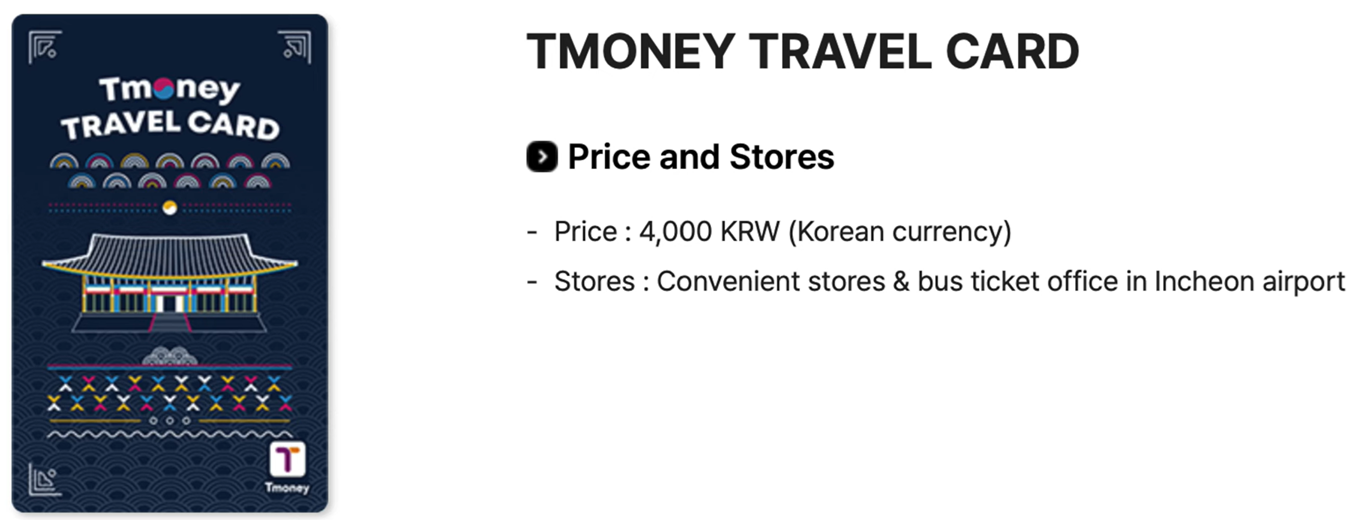
T-money is Korea's contactless transit payment card — think London's Oyster or Tokyo's Suica. It works on subway, city bus, AREX All-Stop, and even some taxis and convenience stores. Get one the moment you land.
📍 Where to Buy
- Inside T1 & T2: GS25, CU, 7-Eleven on all floors including B1 arrivals level
- Card cost: ₩4,000–5,000 (design varies)
- Initial balance: ₩0 — load separately at the counter
💵 How to Recharge (Top Up)
- Any convenience store (GS25, CU, 7-Eleven, Emart24) — cash only for top-ups
- Subway station vending machines — cash and some cards accepted
- Minimum top-up: ₩1,000
💰 Refund Policy
Unused balance (over ₩500) can be refunded at any subway station service desk or convenience store. A ₩500 fee applies for refunds under ₩20,000. Balances over ₩20,000 may require a bank transfer.
For one week in Seoul with daily subway use: ₩20,000–30,000 should cover it comfortably. Load more if you plan heavy regional bus travel.
📊 Situation-Based Recommendation Table
Not sure which option is right for you? Find your situation below.
| Your Situation | Destination | Best Option |
|---|---|---|
| Fastest, price no object | Seoul | AREX Express (₩13,000) |
| Tightest budget, light bag | Seoul | AREX All-Stop (~₩4,750–5,350) |
| Heavy luggage, Gangnam hotel | Seoul | Limousine Bus (₩17,000–18,000) |
| Landing after midnight | Seoul | Night Bus N6000/N6701 or Int'l Taxi |
| Group of 3–4 people | Seoul | Taxi (~₩55,000 shared) |
| Foreign guest, first Korea visit | Seoul | AREX Express — Yeongjong Bridge view included |
| Speed + value to Busan | Busan | Bus 6770→Gwangmyeong KTX (~₩66,000) |
| Absolute fastest to Busan | Busan | AREX + Seoul KTX (~3.5h) |
| Relaxed, no rush to Busan | Busan | Direct Bus (₩49,400–53,500) |
| Sejong (before 16:30) | Sejong | Direct Sejong Bus (₩25,500) |
| Sejong (after 16:30 / holiday) | Sejong | Bus 6770→KTX→Osong→Taxi (~₩38,600) |
| Daejeon, budget pick | Daejeon | Yuseong Bus (₩22,700 →T1) |
| Daegu, lots of time | Daegu | Direct Bus (~₩41,500) |
| Daegu, want to get there fast | Daegu | Bus 6770→Gwangmyeong KTX (~₩58,500+) |
| Jeonju | Jeonju | Direct Bus (₩30,700, ~3h 5m) |
❓ FAQ & Watch-outs
What if I land after midnight?
Which terminal does my airline use — T1 or T2?
Can I buy KTX tickets on the day of travel?
How do I find Bus 6770 to Gwangmyeong?
Can I take a big suitcase on the AREX All-Stop train?
Is there a risk of being overcharged by taxi?
I'm traveling from Daejeon / Sejong — when should I book?
Do I need a Korean phone number to book?
🔗 Useful Official Links
All fares, schedules, and routes in this guide are verified as of May 2026. Transport details change seasonally — always confirm the latest information on the official websites linked above before your trip.
